Seasoning & Flavor
How I Season Food
Salt, pepper, garlic—and when the rest of the cabinet matters.
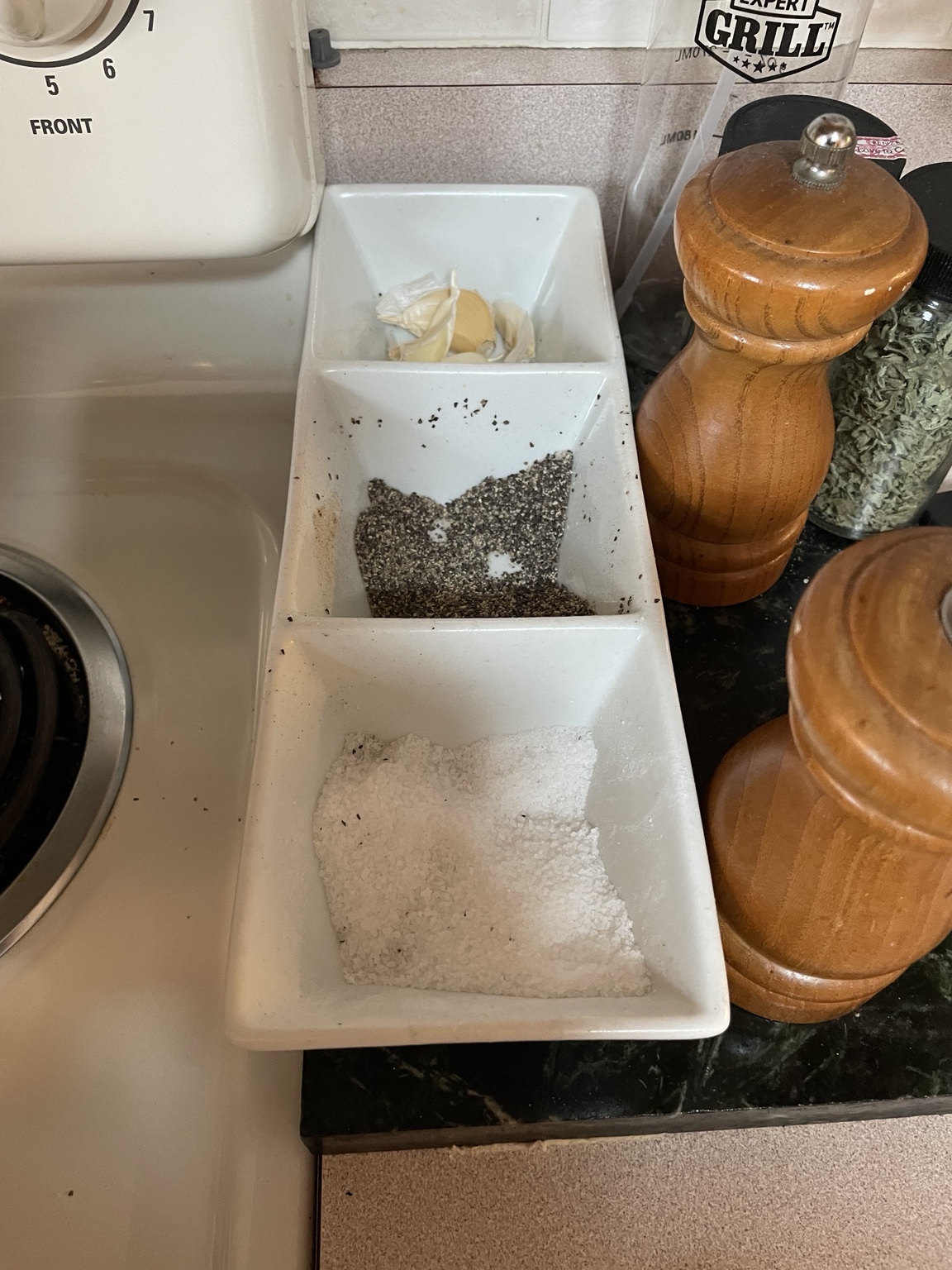
I have a cabinet full of spices. Some of them are used constantly. Some are waiting for a dish that has not happened in a while. A few may be old enough to vote.
But most of my cooking begins in the same place: salt, pepper, and garlic.
That does not mean every dish should taste the same. It means those three ingredients help me establish a base before I decide what else the food needs.
Let’s Talk Salt
I use coarse kosher salt for most cooking. The larger grains are easy to pinch, easy to see, and easier for me to control than table salt.
Salt is not something I save until the end. I add it as the food develops. Vegetables get seasoned when they begin cooking. Meat gets seasoned before it hits the pan. Soup gets tasted and adjusted as the broth comes together.
The goal is not to make food taste salty. The goal is to make it taste more like itself.
Black Pepper
I like coarse black pepper, and I use quite a bit of it. Pepper is not salt’s automatic companion, though. It has its own warmth, aroma, and bite.
Add it early and it settles into the background. Add it later and more of its fragrance stays noticeable. Either can be right. Decide what you want it to do.
Garlic
Fresh garlic, granulated garlic, and garlic powder are different tools. Fresh garlic gives me the most texture and personality. Granulated garlic spreads evenly and handles higher heat well. Garlic powder disappears easily into a sauce, coating, or seasoning mixture.
I used jarred garlic years ago when I was still learning. It isn’t wrong. It just doesn’t live in my house now. If I want minced garlic, I will, well, mince garlic.
Season the Base
If I am starting with onions, carrots, celery, peppers, or another aromatic base, I season it while it cooks. Salt begins pulling out moisture. Pepper and dried herbs warm in the oil. The kitchen starts to smell like dinner before any liquid goes into the pot.
That early seasoning becomes part of the food instead of sitting on top of it at the end.
Taste, Assess, Adjust
This is the part no measured recipe can finish for you.
Taste the food. Ask what is missing. If it seems flat, salt may be the answer—but not always. Sometimes it needs acidity. Sometimes it needs heat, sweetness, richness, or simply more time.
Add a little. Stir. Let it settle. Taste again.
The Green Beans
Green beans are a useful example. I might start them with oil or butter, salt, pepper, and garlic. That is enough to make good green beans.
From there, the direction depends on dinner. Lemon can brighten them. Red pepper adds heat. Bacon changes the whole conversation. Herbs, vinegar, toasted nuts, or a little cheese can all make sense.
The base gives me somewhere to begin. It does not tell me where I have to stop.
The Rest of the Cabinet
Spices should answer a question. Cumin, paprika, oregano, thyme, fennel, chili powder, and everything else in the cabinet are choices, not obligations.
Think about the flavor you want and add one thing with a reason. If you are learning, changing one variable at a time makes it easier to understand what happened.
Oils and Vinegars
Oil carries heat and flavor. Vinegar brings acidity and balance. I keep several of each because they do different jobs, but you do not need a collection to begin.
A neutral oil, an olive oil you like, and one useful vinegar can take you a long way. Buy more when you know what you want it to do.
About Quality
Better ingredients can matter. Fresher spices smell and taste stronger. Good olive oil tastes different from indifferent olive oil. None of that means an expensive pantry is the price of admission.
I began by trying to make inexpensive food taste better. Use what you can afford. Pay attention. Replace things as you learn what matters to you.
Start Here
Keep salt, pepper, and garlic within reach. Season the food as it cooks. Taste before adding more. When you reach for something else, know what you want it to change.
That is not a complete theory of seasoning.
It is a very good place to start.
What matters
Build a base, taste as you go, and let the food—not the cabinet—tell you what comes next.