Experiments & Successes
A Cook Learns to Bake
The Dough That Looked Hopeless
A wet, shaggy mess became pizza and bread after I stopped trying to fix it and let time do the work.

Some people can cook. Some people can bake. A few can do both. I have always considered myself a cook.
Cooking lets me work by feel. I can taste, adjust, add a little more of something, and recover when dinner starts heading in the wrong direction. Baking seems to want measurements, timing, temperature, and a willingness to follow rules.
Then I tried a no-knead pizza dough made with high-gluten flour, water, salt, and yeast. Everything went into the bowl together. No separate yeast proofing. About a day at room temperature, followed by two more in the refrigerator. It sounded manageable.
The first time I mixed it, it looked hopeless. There was no smooth ball and none of the graceful elasticity you see when someone makes bread on television. It was wet, shaggy, and barely holding together. I looked at it and wondered how that mess could possibly become anything.
There was not much to do except put it in an oiled bowl, cover it, and walk away.
Time did what my hands could not.
The next day, it had more than doubled. It was full of life, smelled like a bakery, and looked like real dough. I divided it into portions and gave it another two days in the refrigerator.
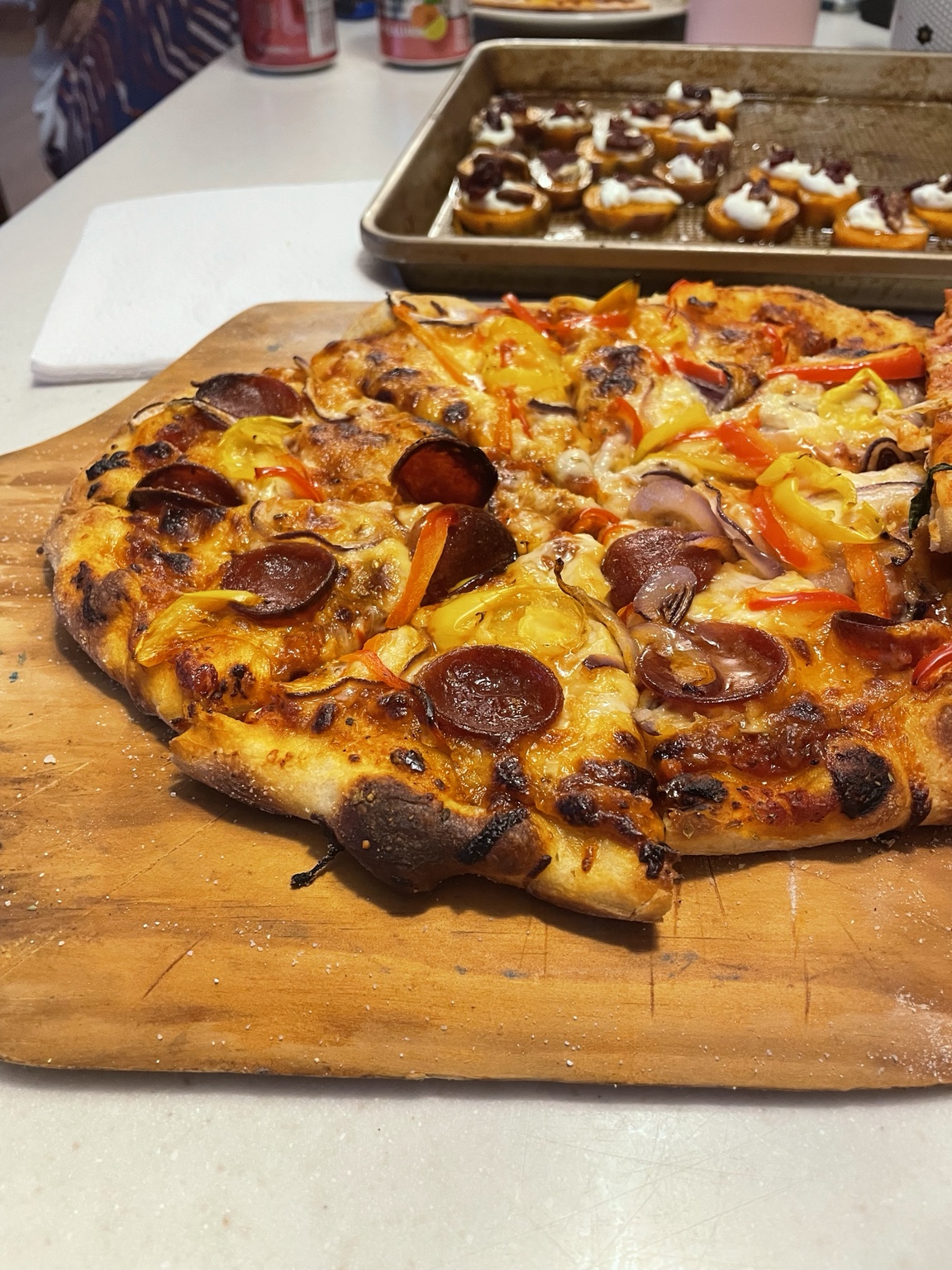

The loaf was the real surprise.
The dough made a very good pizza, but the real surprise came when I put one portion into a hot Dutch oven. It became a small artisan loaf with a crisp, deeply browned crust and an open, airy center. It was just the right amount of bread for two people.
I wish I could say I carefully recorded every detail. I did not. I was so excited when I cut into the loaf that writing down the oven temperature and timing was the last thing on my mind.
“Sometimes time is the ingredient.”
What I carried forward
Stop fixing it.
I have only made this dough twice over the past six or eight months, so I am still learning it. My instinct as a cook is to keep working—to adjust, correct, and fix. This dough needed me to stop touching it and let fermentation do the work. Maybe baking eventually develops its own kind of feel. I am not there yet, but this dough gave me a place to begin.