
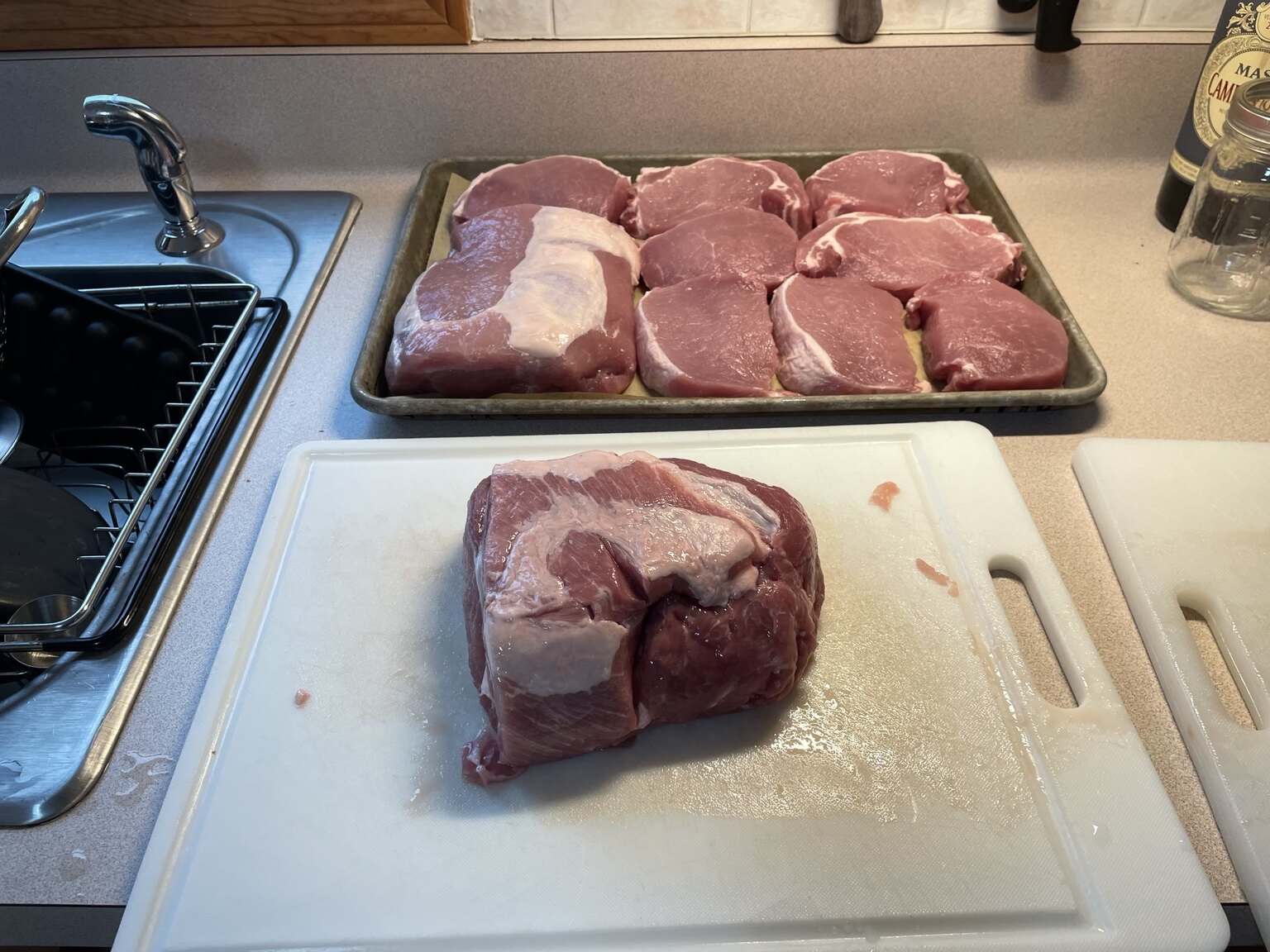
I bought a whole pork loin on sale and portioned it for dinners for two. It weighed 10.13 pounds, cost $1.99 a pound, and came to $20.16.
That did not buy six complete dinners. Vegetables, seasoning, stuffing, and everything else still cost money. It bought six dinners' worth of pork for two people, which is both less dramatic and more useful.
I cut most of the loin into thick chops, saved a center section for a stuffed roast, and packed the rest for later. Buying the larger cut only saves money if you turn it into portions you will actually cook.
The roast began with something already cooked.
There was Thanksgiving stuffing in the freezer. It was August.
The stuffing did not contain poultry. It had already been cooked, frozen, and saved because it was good. I could have served it beside the pork, but wrapping the pork around it turned an old side dish into the center of a new meal.
“Leftovers do not always have to return as leftovers. Sometimes they come back as ingredients.”
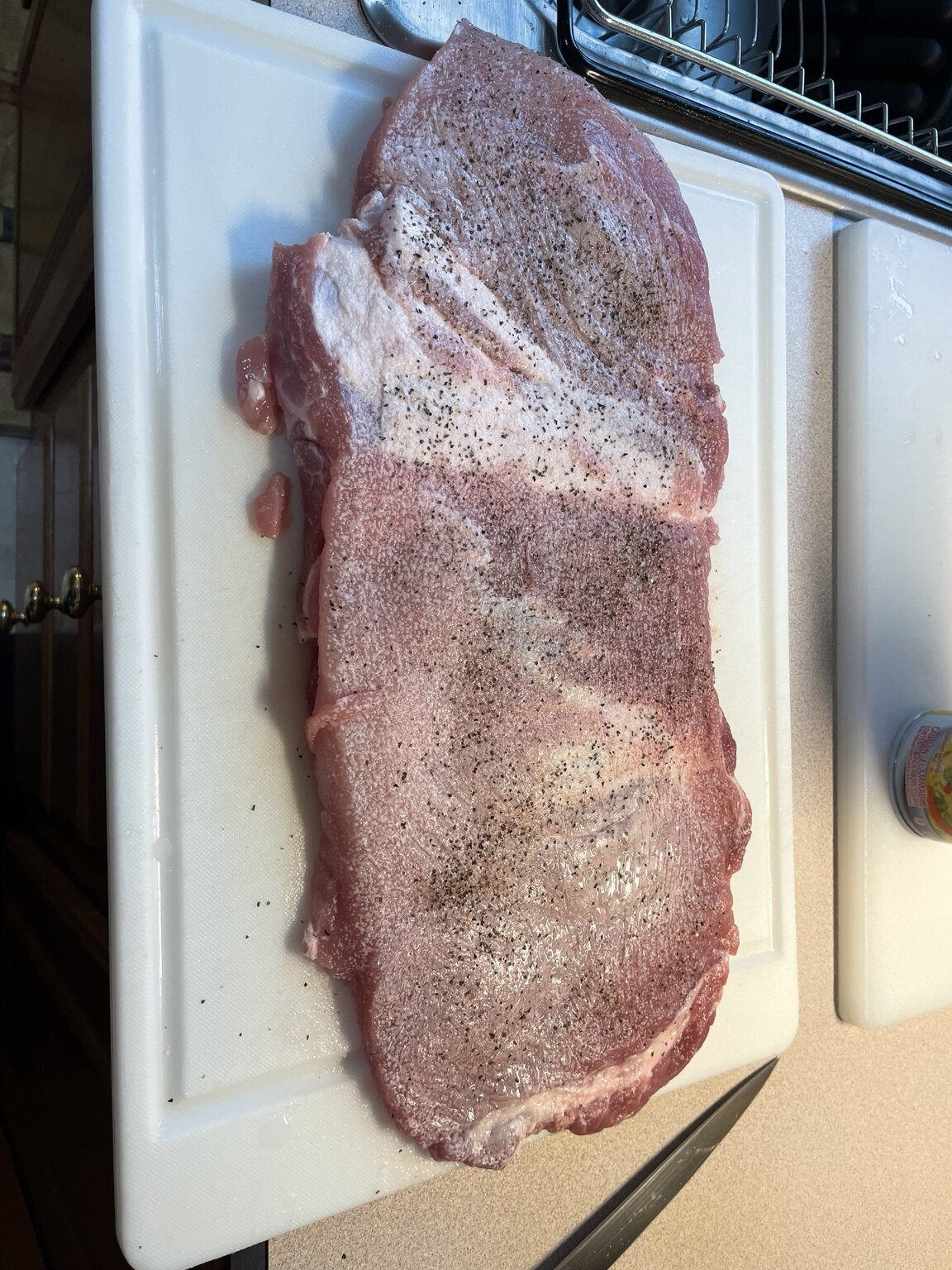
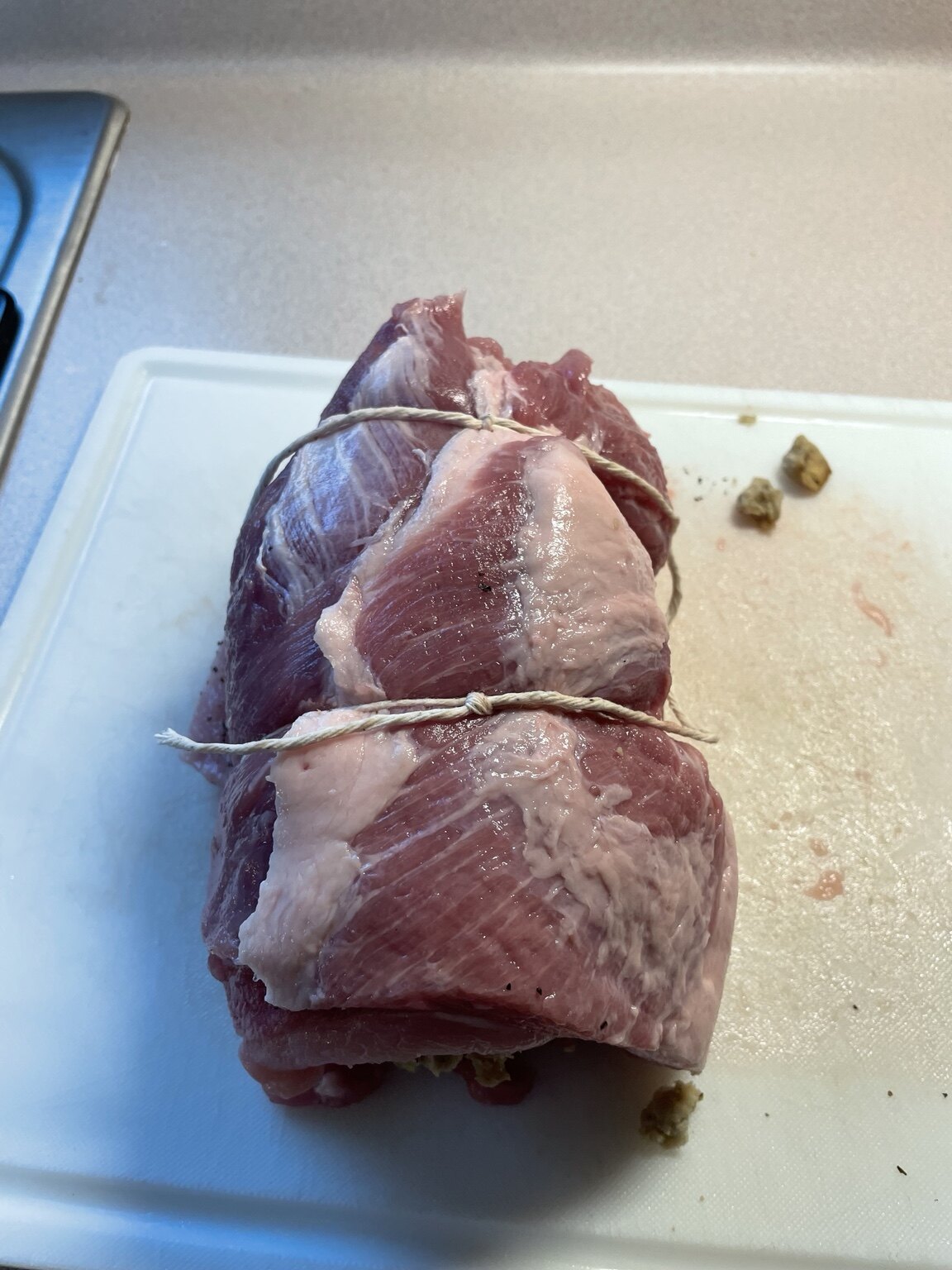
I butterflied the pork, pounded the thicker areas, seasoned the inside, spread the stuffing, rolled it, and tied it. None of those steps was difficult. Each one just required enough patience to avoid making the next step harder.
One pan carried it from the burner to the oven.
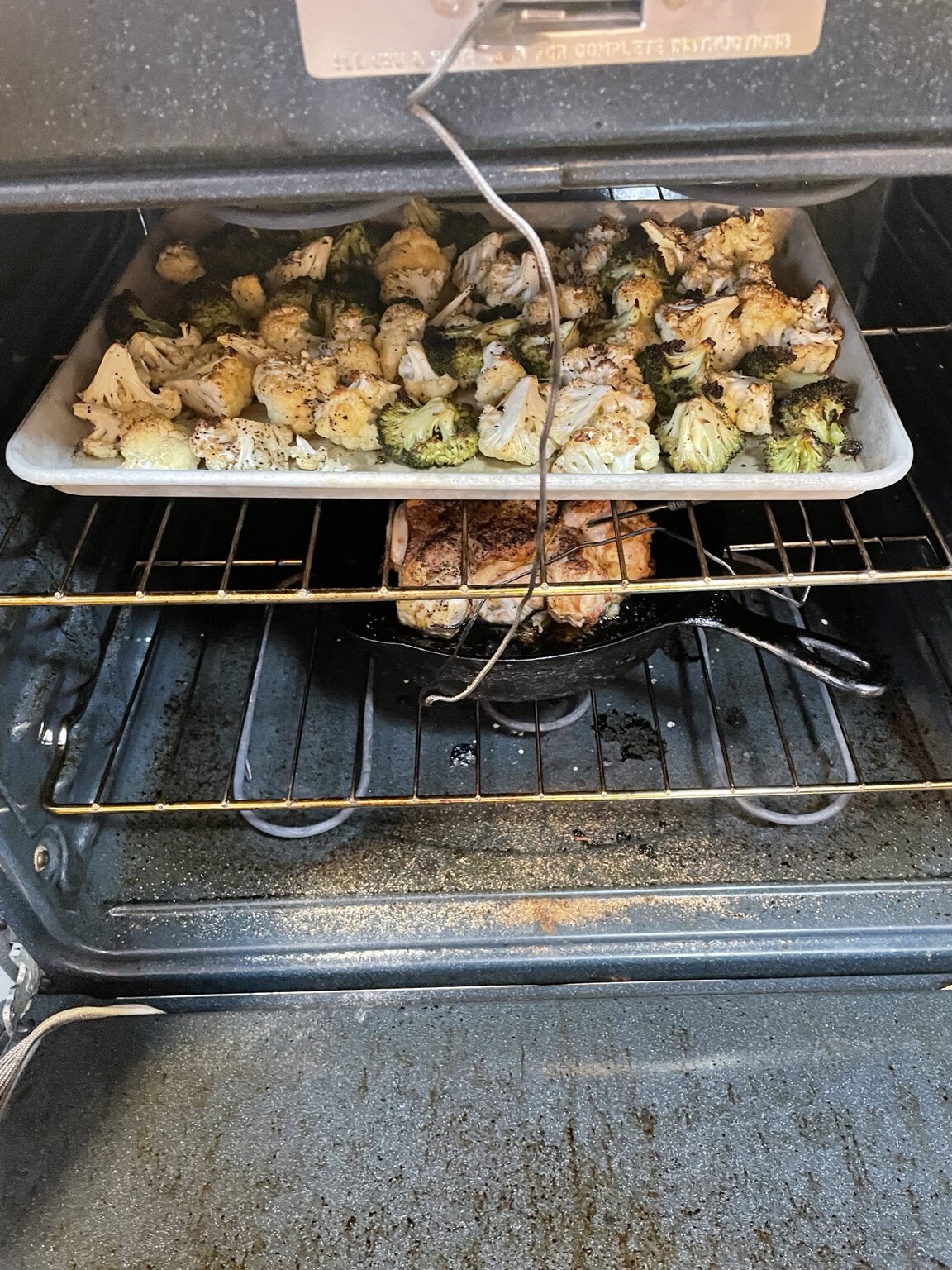
The roast went into my cast-iron skillet over medium-high heat for about two minutes per side. Once it had the color I wanted, I inserted the probe and moved the skillet directly into a 350°F oven.
No transfer. No second roasting pan. My cast-iron skillet could handle both jobs, which meant one less thing to wash.
The broccoli and cauliflower went onto the rack above it when the pork temperature began to rise. Was the timing calculated to the minute? No. This was dinner for two. I watched, adjusted, and everything finished close enough together.
The alarm called me back. It did not make the decision.
I set the receiver to alert me at 142–143°F. The roast then came out of the skillet and onto a clean cutting board to rest. I checked several locations with an instant-read thermometer instead of trusting the single probe location.
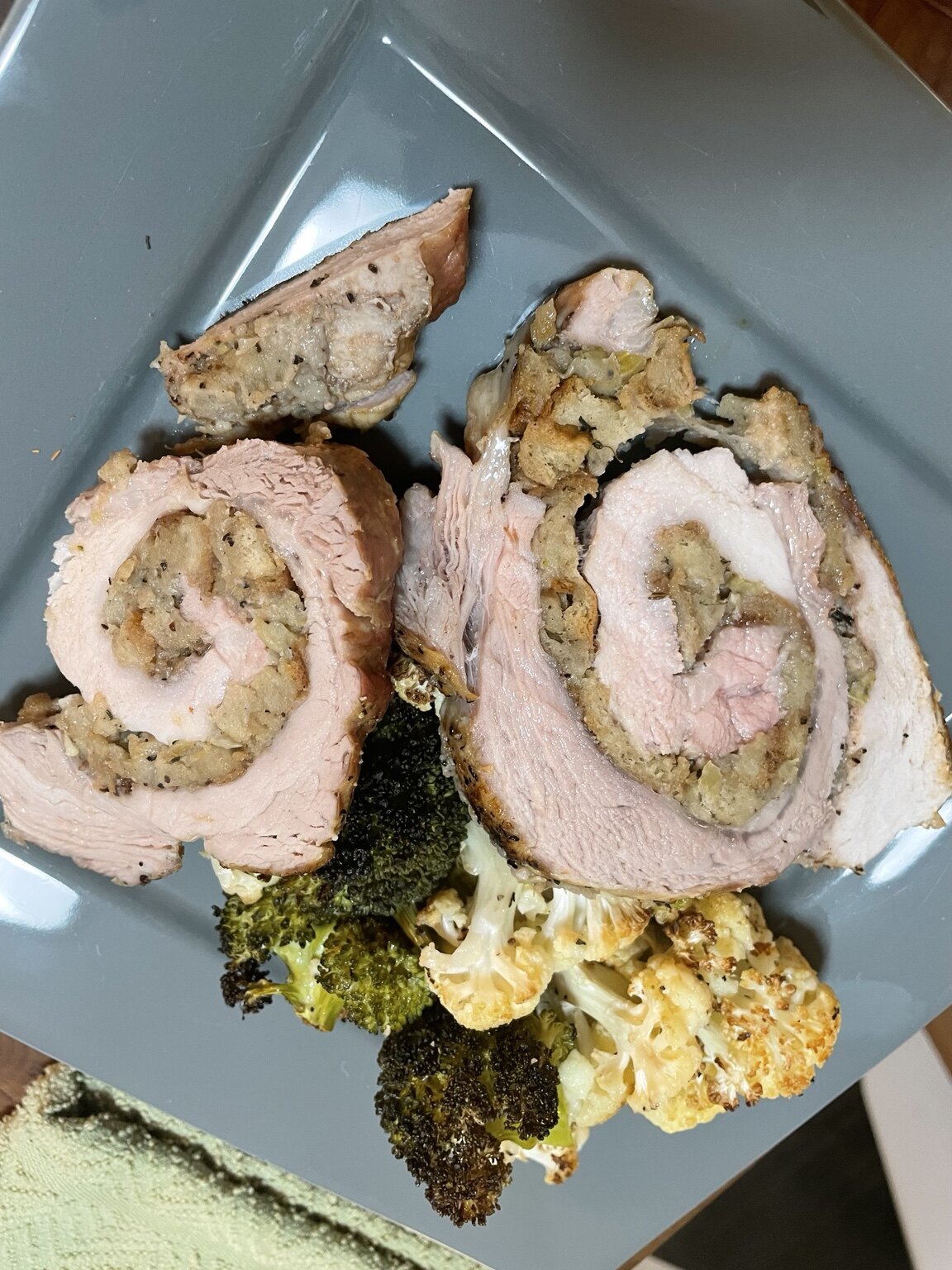
The pork rose to 146°F during the rest. The stuffing's final reading was 164.9°F. The pork stayed moist. The stuffing tasted as good as it had at Thanksgiving, except now it had absorbed the pork juices.
The vegetables kept a little crunch but were softer than tender-crisp—browned, tender throughout, and easy to eat.
What I carried forward
I have a feel for it now.
I made this the way I had before, and I will make it this way again. That confidence did not arrive with the first recipe. It came from mistakes, attention, and repetition.
Learn the technique. Make it yours. Get comfortable with your choices. Pay attention. Cook without fear.